Ask the internet whether to reupholster or buy new, and you'll start an argument. One camp swears a good old frame is worth saving. The other camp just got a quote, did the math against a new sofa, and is still a little angry about it.
After more than 40 years of stripping furniture down to the frame in our Brooklyn workshop, we can tell you the argument is pointless — because both camps are right, about different sofas. The answer is never in the fabric. It's in the frame, and you can check yours in about ten minutes, before you spend a dollar or ask anyone for a quote.
Why the quotes shock people
Reupholstery is skilled hand labor plus materials, and it doesn't scale down just because the sofa was cheap. In New York City, reupholstering a sofa typically runs somewhere between $900 and $2,800 depending on size, fabric, and condition — and a big sectional in an expensive fabric can go well past that. If you bought your sectional for $200 secondhand, a quote like that feels absurd. Those ranges line up with HomeGuide's published reupholstery costs, with New York labor on top.
But compare it to the right thing. A genuinely well-built new sofa — solid hardwood frame, quality springs, good foam — commonly costs $5,000 to $10,000 from the better furniture stores. Against that number, renewing a good frame for a fraction of the price is the bargain it's always been. The mistake is comparing reupholstery to the price of a new cheap sofa. A cheap new sofa is cheap because of what's inside it — and what's inside it is exactly what the test below reveals.

Run the numbers on your piece
The 10-minute frame test
You don't need tools. You need ten minutes and your hands.
1. The corner lift. Stand at one front corner of the sofa. Lift that corner a few inches off the floor while the other three legs stay down. A solid frame barely gives — the whole piece feels like one rigid unit. If the frame twists, racks, or flexes like it's made of rubber, that's the frame telling you the truth: the structure is weak, and no fabric will fix it.
2. Sit down hard and listen. Drop into each seat. A good frame is silent and planted. Creaks, groans, and a feeling of movement under you point to joints that have loosened or cracked. Some loose joints can be repaired — we do it — but combined with a failed corner lift, it's a walk-away sign.
3. Push on the arms and the back. Wiggle the arms front to back, then push the top of the backrest. Arms on a well-made sofa are part of the frame and feel like it. Wobbly arms and a back that sways mean the joints are stapled, glued, or simply tired.
Now check underneath
4. Turn it over (or look underneath). This is the most honest view in furniture. You're looking for two things. Good: a frame of solid wood — ideally kiln-dried hardwood — with the corners reinforced by wooden blocks that are screwed or glued in place. Bad: particleboard, thin plywood, plastic legs screwed into board, and corners held together by staples alone. Most furniture built in the last twenty years at the lower price points is the second kind. It was designed to be sold, not to be serviced.
5. Check the springs through the deck. Press down firmly on the seat deck between cushions. Eight-way hand-tied coil springs — the old standard — feel even and springy across the whole seat. Sinuous zigzag wire springs are acceptable and repairable. A deck that sags in one dead spot, or feels like a sheet of board, tells you the support system has failed.
Ignore the cushions while you test. Flat, lumpy, tired cushions are the cheapest thing to renew — new foam and a wrap transform them. People throw away excellent sofas every week because the cushions died, when the frame underneath had thirty years left in it. Judge the bones, not the padding.
When we tell people to buy new
Honesty is good business, so here it is in print. We regularly talk people out of reupholstering, and you should walk away too if:
• The frame fails the corner lift — it twists, or a rail is cracked.
• The frame is particleboard or stapled softwood. Recovering it costs real money and buys you a prettier version of a disposable sofa.
• The piece smells of smoke or mildew deep in the frame, not just the fabric. Fabric and foam can be replaced; a smell soaked into wood doesn't leave.
• The sofa was inexpensive when it was new and was never comfortable. Reupholstery renews a piece — it doesn't redesign it into a different, better sofa.
When reupholstering wins — easily
• The frame passes the test: rigid, quiet, solid wood, blocked corners.
• The springs are coils or sound zigzag wire.
• The proportions fit your room and your body in a way new furniture at your budget doesn't.
• The piece has history — a parent's chair, a well-made vintage find. A solid vintage frame is often built better than most of what's sold new today.
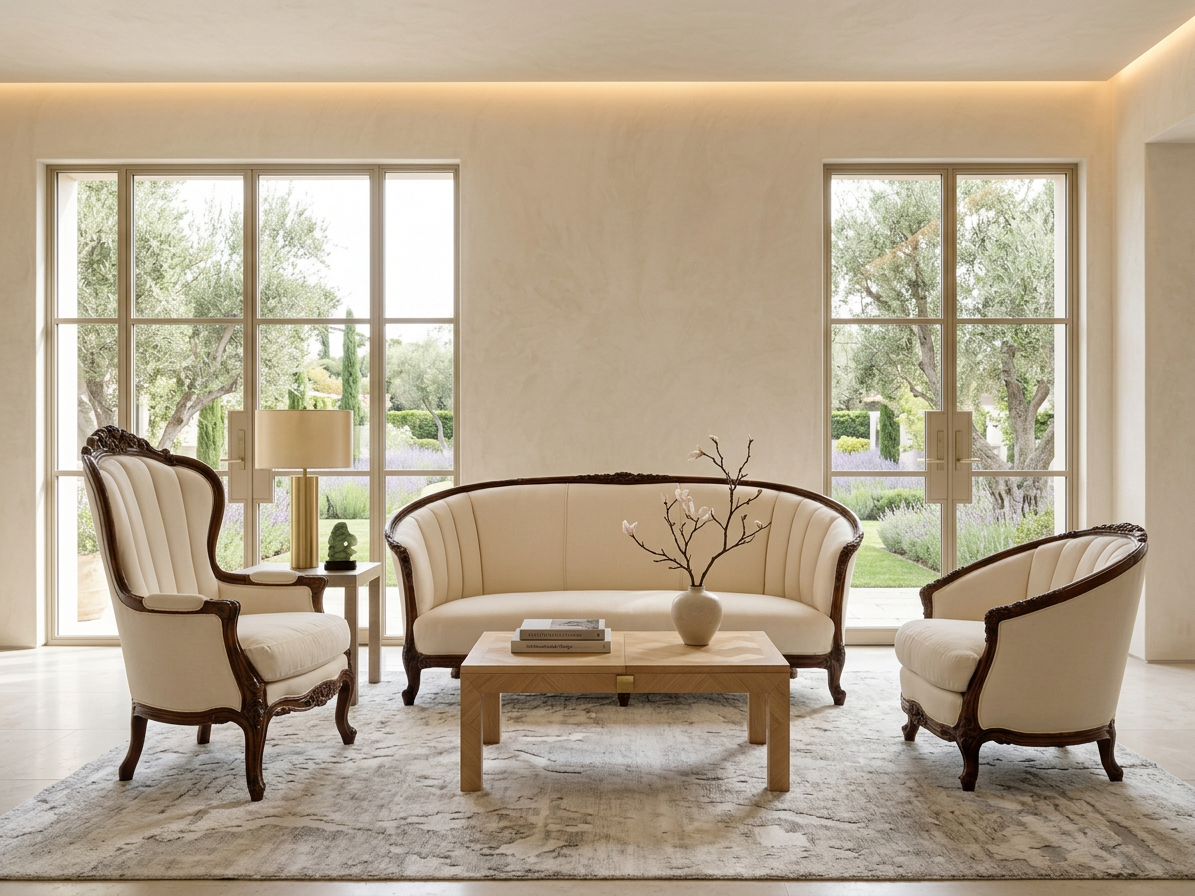
If your sofa passes, you're not spending money on old furniture. You're keeping the most expensive part of a quality sofa — its structure — and renewing everything that actually wears out: fabric, foam, and finish. You can see that work on our furniture upholstery and reupholstery page.

Reupholster or buy new: quick answers
Is it worth it to reupholster a sofa? If the frame is solid hardwood and passes the corner-lift test, almost always yes — you're renewing the parts that wear out while keeping a structure better than most new furniture at the same money. If the frame twists or is particleboard, no.
Is it cheaper to reupholster or buy new? Cheaper than a good new sofa, yes — reupholstery usually runs a fraction of the $5,000–$10,000 a well-built new sofa costs. Cheaper than a budget new sofa, no — but that budget sofa is built to be replaced, not renewed. Or run your own numbers with our reupholster vs replace calculator.
How long does reupholstery take? Most pieces take one to three weeks in the shop once the fabric has arrived — the clock really starts when your fabric is in hand, not when you drop the piece off. We'll confirm the timing for your piece before any work begins.
That's been the deal at our Brooklyn workshop for over 40 years.
Sofa upholstery projects
Explore the range of completed work in our portfolio. Open any project to see its materials, details and photographs.
Residential Upholstery
Custom Gray Abstract-Pattern Sofa Upholstery
Residential Upholstery
French Provincial Sofa & Two Armchairs — Ivory Channel Upholstery